




What Are the Best Ways to Extend the Service Life of a Tanker Semi-Trailer?
2025-04-17
Top 10 Heavy-Duty Trailers for Hauling Large Loads in 2025
2025-05-18
As fuel prices continue to rise and environmental concerns become increasingly urgent, reducing fuel consumption in articulated trucks is no longer optional—it is essential. Heavy-duty transport fleets, particularly articulated trucks, account for a significant share of fuel consumption and emissions. In this context, emerging technologies offer promising solutions, with artificial intelligence (AI) among the most effective tools for improving fuel efficiency.
Artificial intelligence is no longer just a technical term in the technology sector; it has become a practical tool for analyzing driving habits, route selection, stopping times, and even the mechanical condition of articulated trucks. Based on this analysis, AI can provide precise recommendations to optimize fuel consumption. Real-time data-driven systems can now help prevent unnecessary fuel use and enable drivers to manage their trucks more efficiently.
From intelligently selecting less congested routes to analyzing everyday driving behavior, artificial intelligence can help reduce fuel consumption in articulated trucks with remarkable precision. With data analytics and machine learning algorithms working alongside drivers and fleet operators, lowering operating costs and reducing environmental impact are becoming increasingly achievable goals.
Why Use AI to Reduce Truck Fuel Consumption?
In road freight transportation, fuel is not only one of the largest operating expenses but also a major contributor to environmental impact. As fossil fuel prices rise and environmental regulations become increasingly stringent worldwide, articulated truck fleets face growing pressure to reduce fuel consumption. In response, artificial intelligence has emerged as an innovative solution, transforming the way fuel use is monitored, managed, and optimized.
From an economic perspective, reducing fuel consumption in articulated trucks can significantly lower the day-to-day operating costs of transport companies. For a large fleet, even a small percentage reduction in fuel use can translate into millions of tomans in annual savings. Artificial intelligence makes this possible by analyzing data on routes, road conditions, driver behavior, and vehicle condition to support fuel-efficient operating decisions. By gaining deeper insights into truck performance, AI-powered systems can identify sources of energy waste and recommend practical, timely solutions to improve fuel efficiency.
Environmental concerns are another major driver of smart technology adoption in the transport industry. Articulated trucks have traditionally been a significant source of greenhouse gas emissions. However, AI-powered fuel management can help reduce these emissions by improving operational efficiency. For example, minimizing unnecessary idling, maintaining optimal engine speeds, and preventing inefficient load distribution are just some of the practices that machine learning algorithms can help identify, monitor, and optimize.
Combining economic and environmental priorities with the capabilities of artificial intelligence not only helps reduce fuel consumption in articulated trucks but also paves the way for more sustainable, cost-effective, and forward-thinking transportation. In today’s competitive market, adopting AI is no longer just a technological choice; it has become essential for businesses to remain competitive and succeed.
What Is AI, and How Does It Help Reduce Truck Fuel Consumption?
Until a few years ago, the idea that a digital system could improve the way we drive seemed unrealistic. Today, with the rise of artificial intelligence, that idea has become a reality, finding practical applications across many industries, including heavy-duty transportation. AI refers to the ability of machines to simulate aspects of human thinking—not in the same way people do, but by continuously processing and analyzing data that we may not even notice.
In the world of articulated trucks, artificial intelligence acts like an ever-vigilant guide. By collecting and analyzing real-time data on road conditions, weather, driver behavior, cargo weight, and even tire pressure, AI-powered systems can recommend more precise and efficient decisions. For example, if a planned route involves heavy traffic and steep inclines, the system can suggest an alternative route with gentler slopes and more consistent driving speeds to help reduce fuel consumption. The result is a more economical, efficient, and environmentally friendly journey.
But AI’s role doesn’t end there. Behind the scenes, it also helps fleet operators manage their vehicles more efficiently, from scheduling preventive maintenance to detecting unusual fuel consumption in real time. By analyzing driving patterns, AI can even identify drivers who may benefit from additional training to reduce fuel-wasting habits. All these capabilities serve one common goal: reducing truck fuel consumption in a smarter, more precise, and more sustainable way.
With AI in the picture, decision-making is no longer based solely on guesswork and experience. Instead, it is driven by data, analysis, and prediction. As transportation continues to evolve, this approach is no longer just an option—it is a necessity.
How AI Optimizes Routes and Reduces Truck Fuel Consumption

On long, costly journeys, choosing the right route can make a significant difference for articulated trucks. It can directly reduce fuel costs, save time, and even minimize vehicle wear and tear. However, finding the best route is not always straightforward. Factors such as traffic, road conditions, elevation changes, weather, and even potential stopping points all influence the decision. This is where artificial intelligence comes in. Using intelligent route-planning algorithms, AI can identify routes that help articulated trucks minimize fuel consumption.
AI-powered systems analyze large volumes of data in real time to recommend the most efficient and cost-effective route for each journey. These algorithms simultaneously consider factors such as traffic levels, average speeds at different times of day, the number of unavoidable stops, weather conditions, and road gradients. The result is a smarter route tailored to real-world conditions—one that can save both time and fuel.
For example, Route A may be shorter but involve steep inclines, heavy traffic, and frequent stops at traffic lights. In this case, an AI-powered system might recommend an alternative that appears longer but allows for more consistent speeds and lower fuel consumption, making it more efficient overall. This level of decision-making is made possible by machine learning algorithms and large-scale data analysis—tasks that humans cannot perform as quickly or with the same level of precision.
In addition, some modern AI-powered systems learn from previous trips and identify which routes perform best at different times of day. Some companies even use algorithms to coordinate route planning across their entire fleet, rather than optimizing routes for individual trucks. This helps reduce overlapping routes, avoid traffic congestion, and improve overall fleet efficiency.
Ultimately, reducing truck fuel consumption through route optimization is just one of the many benefits of AI. Yet when applied across a large fleet, even this single advantage can save millions of tomans in operating costs and significantly reduce greenhouse gas emissions. By combining artificial intelligence with navigation systems, the transport industry can move toward a smarter, more cost-effective, and greener future.
AI-Powered Monitoring of Truck Fuel Consumption
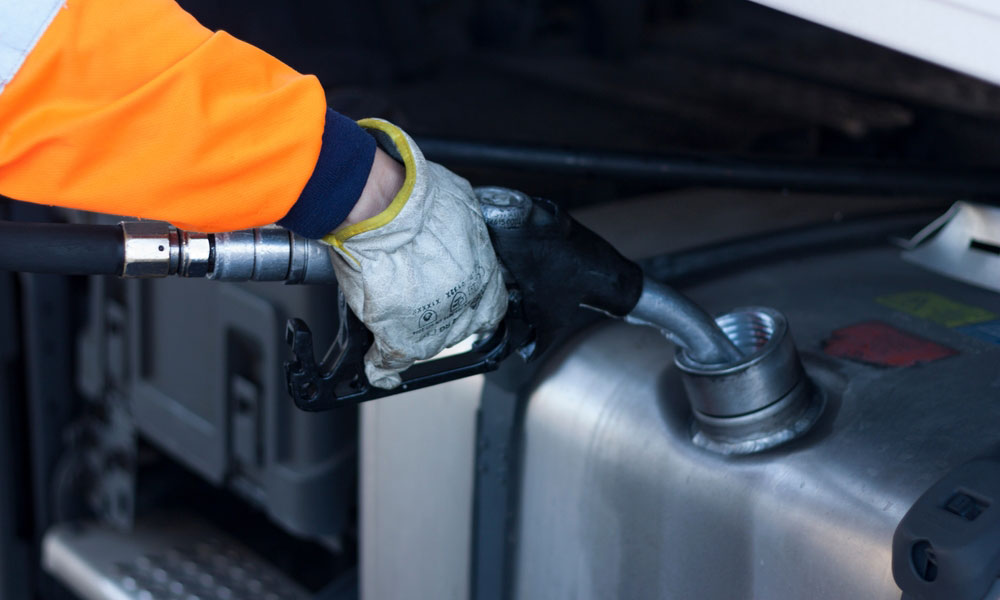
One of the biggest challenges for heavy-duty transport fleets is accurately identifying when and where excessive fuel consumption occurs. In the past, this was largely based on estimates and experience. Today, advances in artificial intelligence have made the process significantly smarter, more precise, and more responsive. AI-powered fuel monitoring is no longer limited to generating reports after a journey; it enables continuous, real-time monitoring of truck performance.
Smart monitoring systems use sensors and onboard modules installed in trucks to collect and analyze data such as real-time speed, fuel consumption per kilometer, engine idling time, engine RPM, engine temperature, and even how firmly the accelerator pedal is pressed. AI algorithms then process this data to identify fuel-intensive driving patterns and pinpoint areas where performance can be improved.
For example, if a driver frequently accelerates aggressively and brakes suddenly, the system identifies this behavior as a factor contributing to higher fuel consumption and sends an alert to the control center or directly to the driver. Similarly, if fuel consumption rises unusually in a particular section of a route, the system can help determine whether the increase is caused by steep road gradients or a technical issue with the truck.
Another impressive capability of AI is predicting future fuel consumption based on current conditions. By analyzing a driver’s current driving style and other relevant factors, the system can estimate how much fuel the truck is likely to consume by the end of the journey. If necessary, it can also recommend adjustments to the route or driving behavior to help improve fuel efficiency.
Ultimately, this type of real-time monitoring and data analysis enables fleet managers to make faster, more informed decisions, from identifying maintenance needs to providing targeted driver training. All these capabilities support one key goal: reducing truck fuel consumption in a smart, effective, and sustainable way.
AI-Powered Driver Training for Articulated Trucks

Today, training articulated truck drivers involves far more than a few theory sessions and traditional driving exercises. With advances in technology, particularly artificial intelligence, driver training has entered a new era—one in which driving behavior is not only observed and recorded but also analyzed scientifically and in detail. What is the purpose of this approach? Ultimately, it aims to improve each driver’s driving style based on real-world data and individual fuel consumption patterns, helping reduce overall truck fuel consumption.
Smart systems create an individual profile for each driver by accurately recording data such as accelerator use, sudden braking, gear changes, extended idling, and other behaviors that increase fuel consumption. These profiles help trainers and fleet managers identify exactly where each driver needs to improve. For example, the data may reveal that a driver presses the accelerator too hard on uphill sections or fails to shift into a lower gear when needed—habits that can significantly increase fuel consumption.
The key advantage of this training approach is that it replaces general, vague advice with personalized, data-driven guidance. Using driving simulators and real-time feedback, trainers can even recreate and correct inefficient driving behaviors. This kind of AI-powered, on-the-spot training is exactly what drivers need to develop more fuel-efficient driving habits.
This targeted training not only improves driver performance but also helps reduce fleet wear and tear, maintenance costs, and, most importantly, excessive fuel consumption in articulated trucks. In essence, artificial intelligence transforms driver training from guesswork into informed, data-driven decision-making—exactly what the transportation industry needs today.
How Companies Use AI to Reduce Truck Fuel Consumption
When we talk about artificial intelligence in the transportation industry, the technology may initially seem somewhat abstract. However, the experiences of major transportation companies around the world show that AI is no longer just an option but a genuine competitive advantage, particularly when it comes to reducing fuel consumption in articulated trucks.
One notable example is UPS. This global logistics giant has used AI algorithms to optimize delivery routes, eliminating millions of unnecessary miles. In a single year, this initiative helped save more than 38 million liters of fuel and significantly reduce greenhouse gas emissions. Its algorithms even encouraged drivers to make fewer left turns because, in countries where traffic keeps to the right, turning left can require longer waits and consume more time and fuel.
Volvo Trucks is another pioneer in applying AI technology to heavy-duty trucks. By implementing intelligent fuel-consumption monitoring and analysis systems, the company has been able to assess individual driving behavior and provide targeted training based on the results. Over a six-month period, some Volvo customers reported fuel savings of up to 15%, achieved simply by optimizing driving styles and routes.
In Germany, DB Schenker also uses artificial intelligence to manage its fleet. By analyzing vehicle performance in real time, the company can help prevent unnecessary maintenance and improve fleet efficiency through continuous fuel-consumption monitoring. Using machine learning, these systems can even detect unusual fuel-consumption patterns and issue alerts before they lead to mechanical failures or excessive fuel use.
These examples show that integrating artificial intelligence into transport management is more than a technological decision. It is a smart business strategy for reducing truck fuel consumption and improving fleet sustainability. Whether a company operates a small or large fleet, AI can be adapted to a wide range of operational needs and may deliver a return on investment relatively quickly.
The Future of AI in Transportation and Truck Fuel Efficiency
When we look at the evolution of the transportation industry, it is clear that artificial intelligence is at the heart of this transformation. What once seemed like a luxury innovation has now become an economic, environmental, and operational necessity. From real-time fuel monitoring and targeted driver training to intelligent route planning, AI is redefining how we drive, manage, and optimize articulated trucks.
However, the future extends far beyond what we see today. The next generation of intelligent systems will do more than make decisions—they will help shape them. Trucks that automatically adapt driving behavior with the help of AI, and fleets that independently select the best combination of routes and departure times for each assignment without human intervention, are no longer just dreams. They represent real steps toward a smarter and more promising future for transportation.
Beyond reducing truck fuel consumption, artificial intelligence can also help lower air pollution, conserve natural resources, and reduce substantial operating costs. The future is one in which decisions are data-driven, precise, and objective—and this is exactly where artificial intelligence shines.
So, if we want to build a forward-thinking, sustainable, and cost-efficient fleet, the time for simply considering AI adoption has passed. Now is the time to put it into practice. The future of transportation is already taking shape, and artificial intelligence is helping steer the way forward.